

Across the U.S., local economies are evolving as cities adapt to changing industries, shifting demographics and new educational demands. Over the past decade, major metropolitan areas have seen dramatic transformations in the types of jobs that define them. To better understand these shifts, an analysis of workforce and education trends across the nation’s largest cities was conducted on behalf of Northern Kentucky University (NKU).
This report, based on data from the U.S. Census Bureau, explains which regions are leading in technology, healthcare and finance jobs, and which cities are producing the most graduate-level-educated professionals driving these industries forward. For today’s professionals and adult learners, these insights highlight where opportunities are growing and how advanced education can help individuals align their skills with the nation’s most dynamic career fields.
Key Takeaways
- Spokane, Washington, has the nation’s highest share of healthcare workers, with 22.6% of its workforce employed in the industry.
- Arlington, Virginia, ranks first in technology employment, with 29.9% of its workforce in tech — surpassing San Francisco.
- Miami, Florida, experienced the largest growth in finance jobs, with a 109.6% increase over the past decade.
- Arlington, Virginia, also leads major U.S. cities in educational attainment, with 41.8% holding graduate degrees, followed by Washington, D.C. (38.3%) and Fremont, California (32%).
The Industries Defining Urban Employment
Cities across the country are seeing distinct patterns emerge in the types of industries driving local economies. While legacy sectors like manufacturing and retail continue to play important roles, healthcare and technology have become dominant forces shaping employment.
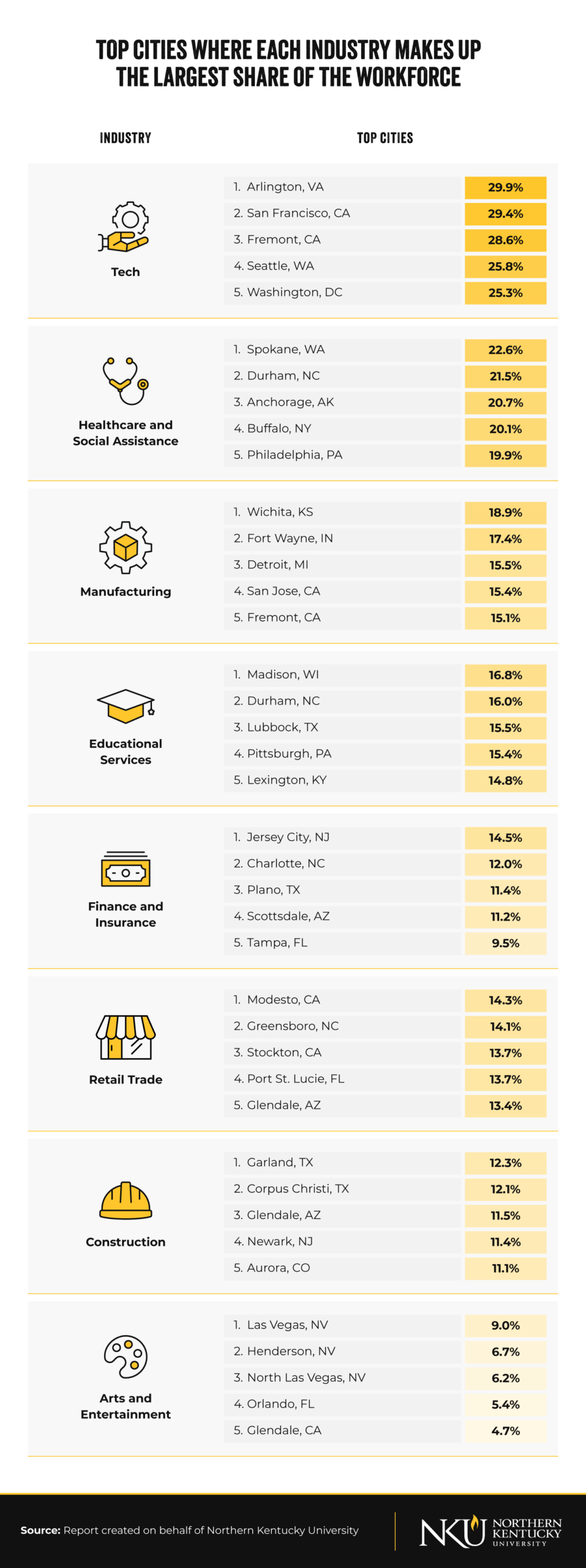
Arlington, Virginia, leads in technology, with nearly 30% of its workforce employed in information and professional services, surpassing San Francisco’s 29.4%. Fremont, California, follows at 28.6%, showing that the Bay Area remains a powerful hub for innovation.
Spokane, Washington, has the nation’s highest concentration of healthcare workers, with 22.6% of its labor force in the industry. Durham, North Carolina; Anchorage, Alaska; and Buffalo, New York, follow next, each with more than 20% of employed residents working in healthcare and social assistance.
Other cities have built their strength around different industries. Wichita, Kansas, leads in manufacturing at 18.9%, while Madison, Wisconsin, stands out in education, with 16.8% of workers in educational services. Jersey City, New Jersey, ranks first in finance and insurance at 14.5%, and Modesto, California, tops retail trade with 14.3% of its workforce in the sector.
Understanding where industries concentrate offers only part of the picture. Examining how those concentrations have changed over time provides deeper insights into regional economic development.
Tracking a Decade of Industry Growth Across U.S. Cities
While some cities have long been associated with specific industries, others are quickly becoming new centers of economic opportunity. Shifts in workforce composition over the past decade reveal how rapidly local economies can change when investment, innovation and infrastructure align.
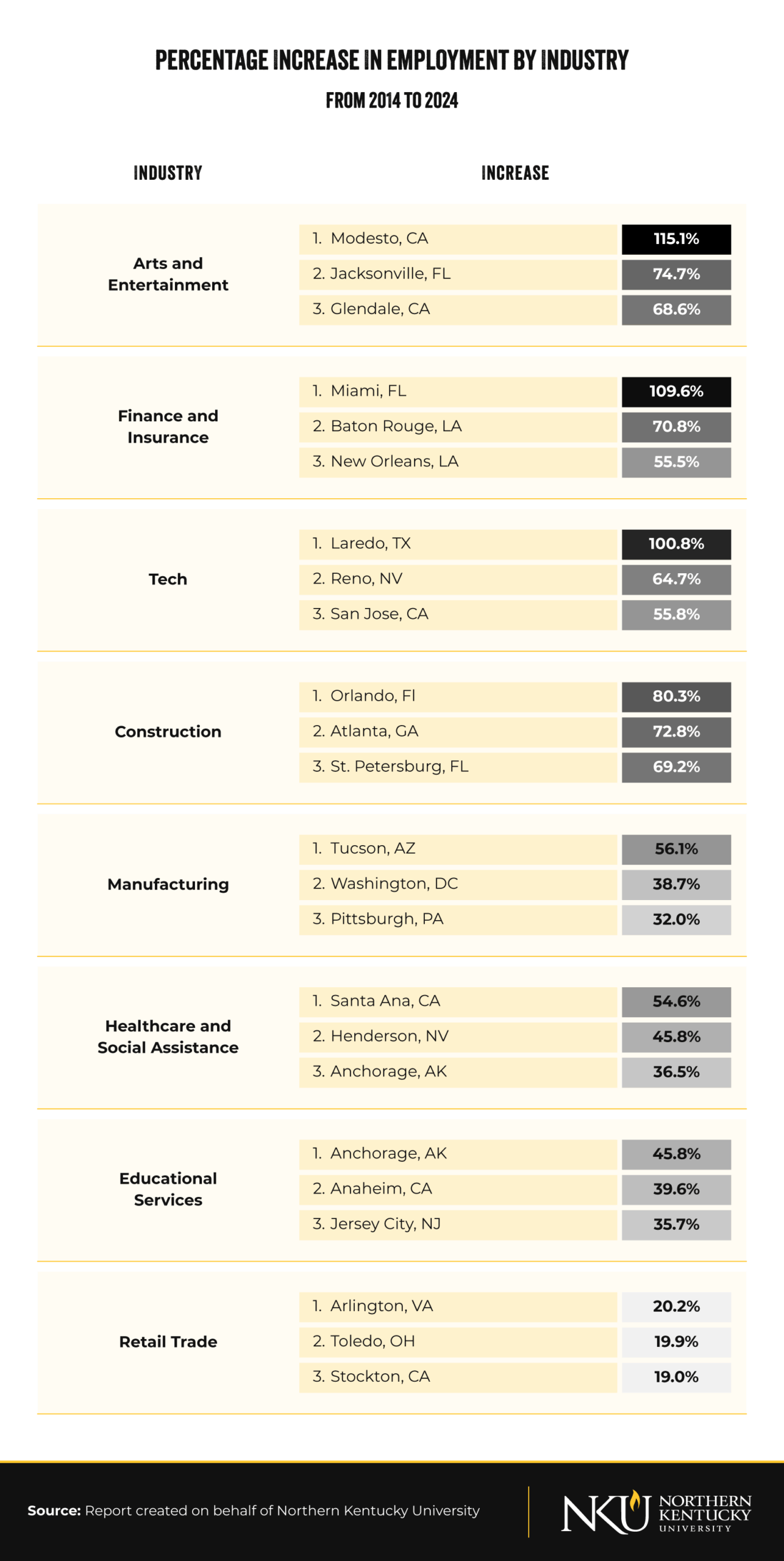
Santa Ana, California, has experienced a 54.6% increase in its healthcare employment share since 2014, signaling a significant investment in local health infrastructure and services. In Silicon Valley, San Jose sustained its global reputation for innovation with a 55.8% jump in tech employment over the same period. However, Laredo, Texas, saw the greatest increase in tech employment, with a 100.8% rise.
Another remarkable transformation occurred in Miami, Florida, where finance-related employment more than doubled. It surged by 109.6% from 2014 to 2024 as the city positioned itself as a rising financial hub in the Southeast.
Mapping Master’s Degrees
The strength of a city’s workforce is not defined solely by industry concentration or job growth but also by the education levels of its residents. Graduate education reflects the availability of specialized knowledge and professional expertise that help sustain advanced industries and attract new investment.
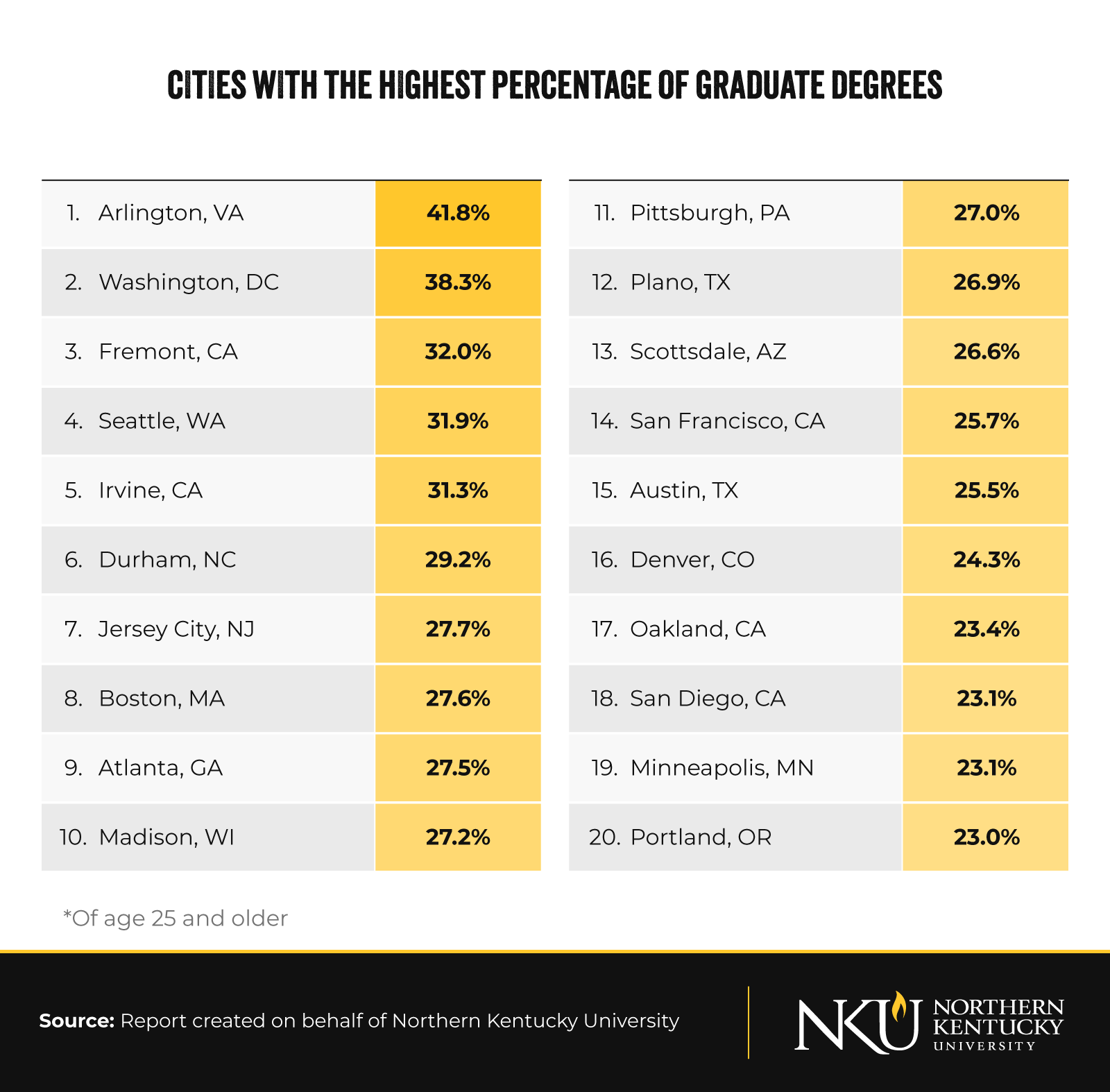
Arlington, Virginia, leads all major U.S. cities, with 41.8% of adults aged 25 and older holding a graduate degree. Washington, D.C., follows at 38.3%, reinforcing its role as a center for public policy, research and professional services.
Fremont, California (32%) and Seattle, Washington (31.9%) illustrate how regions with strong technology sectors often maintain high concentrations of advanced degree holders. Rounding out the top group, Irvine, California (31.3%) and Durham, North Carolina (29.2%) highlight the connection between nearby universities, research activity and regional innovation.
These patterns suggest that cities leading in technology, healthcare and other high-skill industries often also rank among those with the most educated workforces. While education alone does not determine economic outcomes, the data indicate that advanced learning and industry growth frequently reinforce one another in U.S. cities.
Education and Innovation Drive the Cities of Tomorrow
Cities that invest in technology, healthcare and education are expanding their job markets and attracting highly skilled professionals who sustain that growth. Arlington, Washington, D.C. and Fremont demonstrate how advanced education and industry development often progress together, shaping where new opportunities emerge. These regions demonstrate how a strong knowledge base supports innovation and sustainable economic growth.
For working adults and aspiring graduate students, understanding these patterns can help inform career and education choices. Pursuing a graduate degree or professional certificate can prepare individuals to meet changing workforce needs and take advantage of emerging opportunities in the nation’s most competitive cities. Staying adaptable, informed and focused on developing advanced skills will be key to thriving in the evolving job market.
Methodology
This analysis, completed on behalf of Northern Kentucky University, compares the workforce composition of 105 major U.S. cities by using 2014 and 2024 employment data from the U.S. Census Bureau’s American Community Survey (ACS) 1-Year Estimates. Industry data was drawn from Table S2403: Industry by Occupation, and educational attainment comes from Table S1501: Educational Attainment. Percentages represent each industry’s share of the total employed population aged 16 and older, with percentage changes calculated between 2014 and 2024.
Industries analyzed include information, finance and insurance, educational services, healthcare and social assistance, manufacturing, retail trade, construction, and professional, scientific, and technical services. The tech category was estimated by combining the information and professional services sectors to better represent technology-related employment.
About Northern Kentucky University
Northern Kentucky University offers a range of flexible and affordable online degree programs designed for working professionals. NKU’s online Master of Science (M.S.) in Cybersecurity program prepares students to protect the digital world from cyber threats while strengthening the technical and analytical skills employers value most.
Designated as a National Center of Academic Excellence in Cybersecurity (NCAE-C) by the National Security Agency, NKU provides 100% online coursework that blends theory with hands-on experience in areas such as cloud security, data privacy, risk assessment and management, and incident response. Graduates are prepared for growing career opportunities in roles like cybersecurity analyst, information security manager and cybercrime investigator.
Fair Use Statement
Information from this article may be shared for noncommercial purposes only. When citing or referencing this content, please include a link to Northern Kentucky University and proper attribution to the original source.