

Artificial intelligence has become a regular part of academic life, reshaping how students research, write and study. As AI tools continue to evolve, they raise new questions about how learners absorb information and build long-term skills. A questionnaire conducted on behalf of Northern Kentucky University (NKU) asked college students and professors across the U.S. to share their perspectives on how AI is influencing memory, confidence, classroom performance and the ability to work independently.This research aimed to gain a clearer understanding of how emerging technology is changing the student learning experience. The results revealed a mix of new habits, emerging challenges and shifting expectations as students and educators navigate an academic environment shaped by rapid technological change.
Key Takeaways
- 45% of college students have become more dependent on AI to start or complete assignments.
- 22% of college students have struggled to recall basic concepts after relying on AI explanations.
- Nearly one in five students admit that AI helps them get through classes without truly learning the material.
- 69% of college professors say students now perform well on assignments but struggle to demonstrate long-term understanding on exams.
- 64% of college professors are extremely or very concerned about students maintaining deep thinking skills as AI use becomes more frequent.
- 57% of college professors say student comprehension has declined since AI tools became widespread.
Why Students Are Turning to AI for Schoolwork
Many students have embraced AI tools as a regular part of their academic routines. They describe AI as a resource that helps them understand class content and complete assignments more efficiently. Students also shared how this technology shapes their confidence, memory and independent thinking.
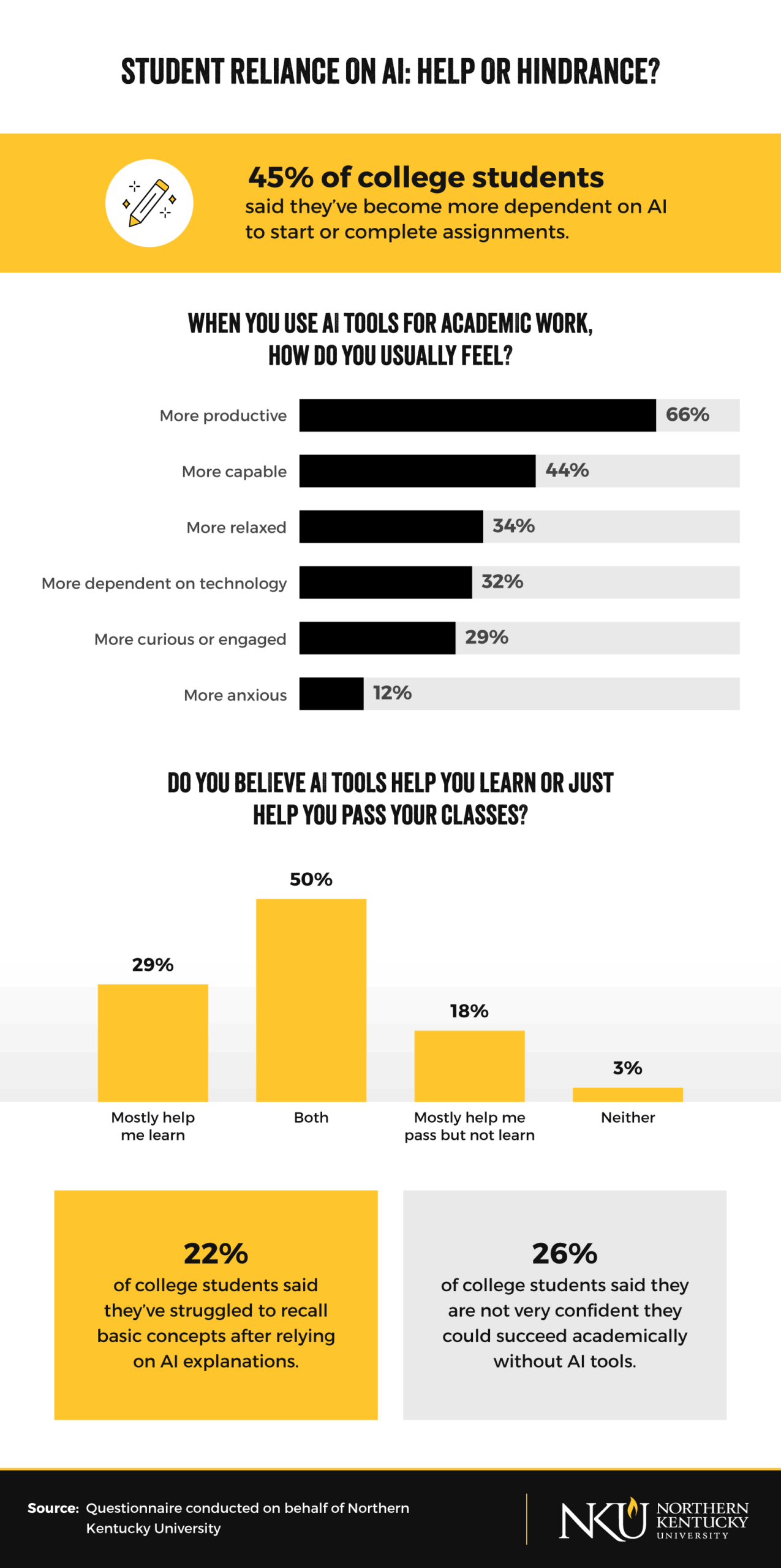
Students reported high reliance on AI for academic tasks, as 45% said they had become more dependent on these tools to start or complete assignments. In-person learners were slightly more likely than online learners to report this dependence (53% vs. 45%, respectively). Students used AI for a variety of reasons, with many turning to it to better understand course material (35%) or improve the quality of their work (30%).
Responses also showed that AI sometimes created new gaps in comprehension. More than one-third of students (37%) submitted AI-assisted work they did not fully understand, and 22% struggled to remember foundational concepts after using AI explanations. Nearly one in five said AI helped them move through classes without truly learning the material.
Students differed in how AI affected their long-term knowledge retention and independent thinking. While 20% felt AI made it harder to remember what they learned, 37% said it improved their recall. Students also expressed mixed views about whether AI strengthened or weakened their ability to think independently. Twenty-two percent said AI use has made them more capable of independent thought, while 20% said it has lessened this ability.
The Classroom Reality
Educators described an academic environment where students often balance strong assignment performance with weaker conceptual understanding. Many professors said they were seeing changes in how students engage with material, complete coursework and demonstrate learning.
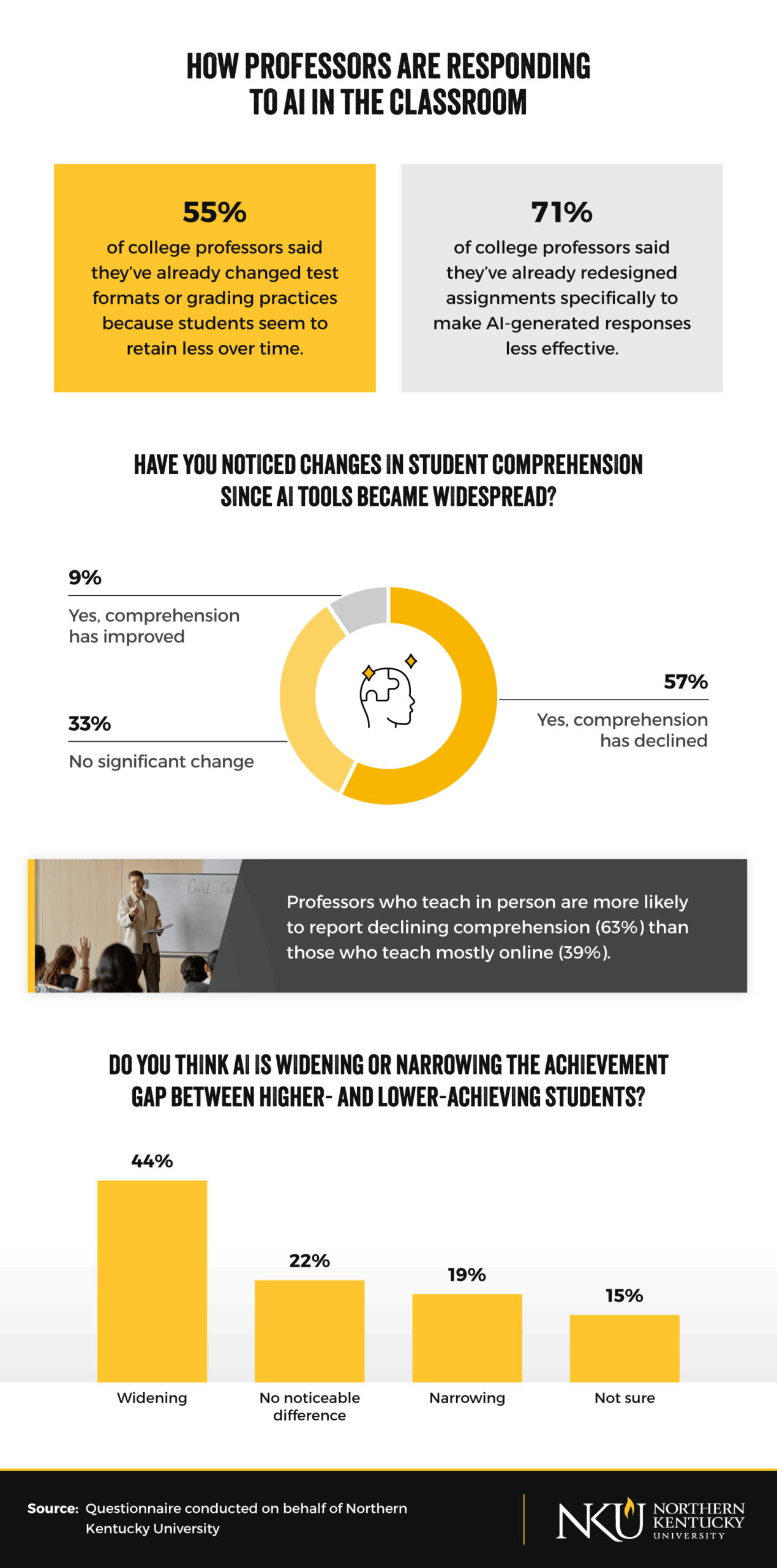
Student comprehension emerged as a major concern among educators. A majority (57%) said comprehension had declined since AI tools became widespread, and many (59%) felt these tools were hurting students’ critical thinking more than they were helping (6%).
Professors shared that students often relied on AI to complete work that appeared polished but did not reflect deep understanding. Some (43%) reported an increase in surface-level work, with in-person instructors (44%) more likely than online instructors (37%) to notice this shift. Academic integrity challenges were another pressing issue, as 83% of professors had caught students submitting AI-generated work as their own.
Which Learning Environments Are Adapting Best to AI?
As AI becomes more advanced, instructors continue to examine how different learning environments influence students’ ability to adapt. Professors expressed concerns about how students approach complex thinking, long-term retention and higher-order learning skills.
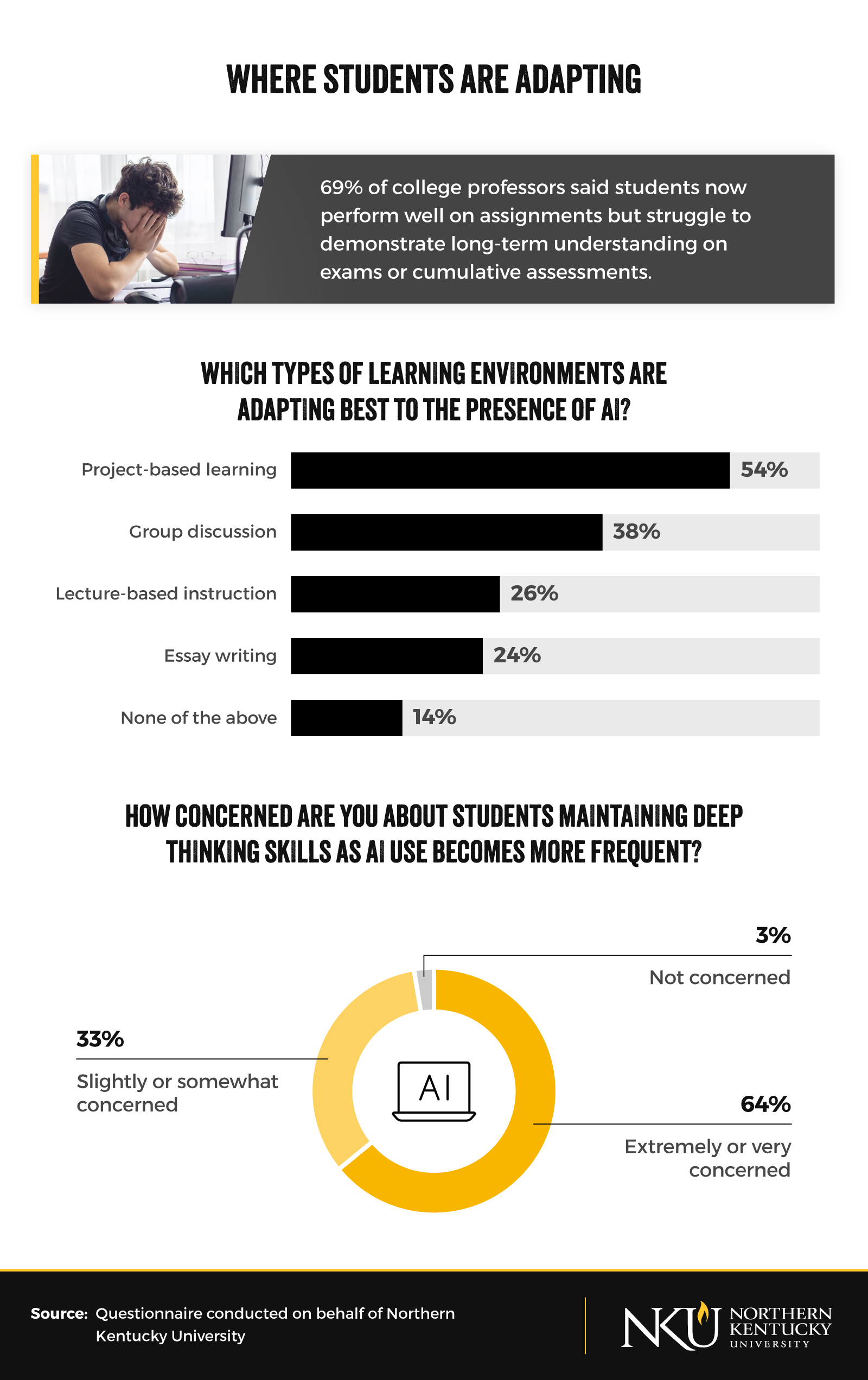
Many educators (64%) were concerned about whether students could maintain deep thinking skills while using AI tools more often. Professors also observed a widening gap between assignment performance and exam results. Sixty-nine percent said students often complete coursework successfully but have difficulty demonstrating long-term understanding during tests.
Navigating Learning With AI in a Healthy Way
Students and professors are adjusting to new learning patterns shaped by frequent AI use. Many students have used AI to better understand assignments, yet some found it harder to retain information or think independently. Professors have also noticed strong assignment performance but weaker comprehension, which suggests that AI is changing how students retain academic work.
For students, these findings point to the value of using AI as a helpful guide rather than a replacement for learning. Reviewing course material, practicing skills and checking understanding without AI can strengthen long-term knowledge. When students balance AI tools with active study habits, they can build confidence and stay engaged in their learning.
Methodology
A questionnaire of 300 college students and 192 college professors was conducted on behalf of NKU to explore how AI tools like ChatGPT are transforming the student experience and how educators are responding. Data was collected in November 2025. This is a non-scientific, exploratory study and is not intended to represent all college students or professors.
About Northern Kentucky University
Northern Kentucky University offers fully online programs designed to support students and educators seeking flexible, high-quality education. The university’s programs focus on real-world learning and skills students can use in their day-to-day work. Those interested in advancing their understanding of teaching and learning can explore NKU’s online education degrees and programs that are designed to support future educators and current educational professionals.
Fair Use Statement
Information from this article may be shared for noncommercial purposes only. Please include a link to this page and proper attribution to Northern Kentucky University when referencing any findings.